




It is Good Friday; Jesus dies on the cross for us. In the solemn silence of this day, let us meditate together with Father Maurizio Botta.
A silence that speaks
At the hour of Jesus’ death, silence falls over the whole earth.
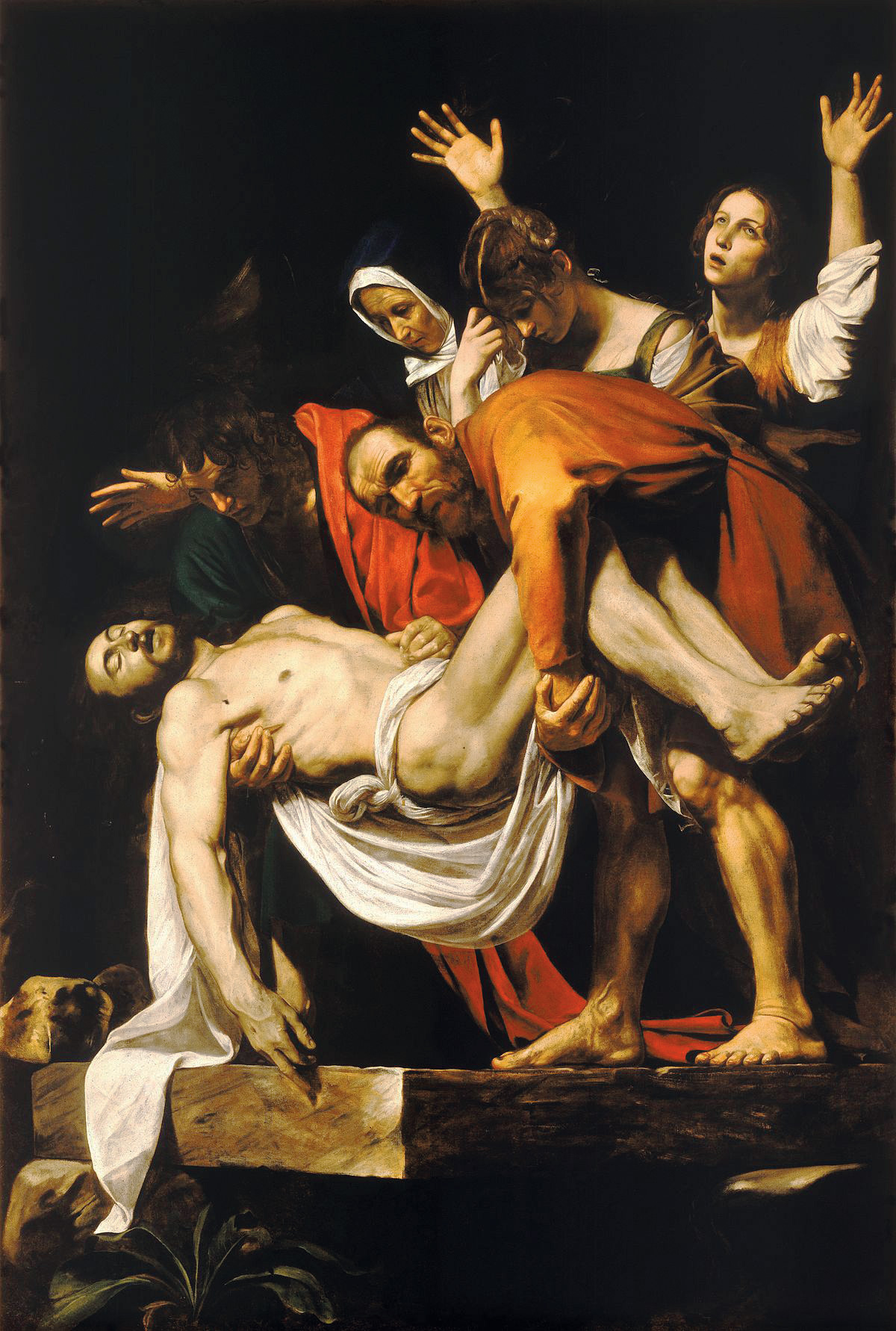
Today, to enter into the mystery of Jesus’ death, I would like to offer you a wonderful image: The Entombment by Caravaggio.
Looking at this painting, I invite you to think of an antiphon from an ancient Christmas novena, thus connecting the mystery of Jesus’ birth with the mystery of his death, which should never be separated because they are part of one single whole. Here is the antiphon: «O Rex Gentium et desideratus earum, lapisque angularis, qui facis utraque unum: veni, et salva hominem, quem de limo formasti» (O King of the Nations, longed for by them, and cornerstone, who unite all as one: come and save the human being whom you formed from mud). Jesus is the one desired by the nations, and we call him the cornerstone who is able to make the two peoples one: come and save the human being whom you formed from mud (slime).
Jesus is our solidity
The image of mud is truly moving because mud is something insubstantial, extremely fragile, a mush: this is who we are without Christ; we are this insubstantial mush. I say this because in Caravaggio’s painting, the dead Jesus, taken down from the cross, touches this stone (the same one mentioned in the Christmas novena antiphon). It is significant that Caravaggio makes Jesus’ hand point exactly to this cornerstone, this solid foundation: he is the only one on whom we can build.
Let us enter the mystery
Let us focus on another detail of the painting: the depiction of Nicodemus. All commentators say that Nicodemus is looking at the viewer of the painting; certainly, it is true that he is looking at whoever views the painting, but we must consider that this painting was not created to be displayed in a museum. Caravaggio conceived it to be placed within an altarpiece: therefore, below it - relative to its position - Holy Mass was to be celebrated. If this is so, at the moment when the priest raises the consecrated host, Nicodemus looks at it; thus, between the viewer - in this case, a person participating in Holy Mass - and Nicodemus’ gaze, there is the living Christ, present in the Eucharist.
Caravaggio did something incredible: he invites those who look at the painting to enter into that mystery, which is not merely depicted artistically but is also the mystery being celebrated in a living way at that very moment. The artist is having Nicodemus say: «Do you realize that this is happening?» and Jesus, taken down from the cross, pointing to the cornerstone, tells us: «You who are mud, you who are clay, can find solidity only in me.»
All of this is fascinating because, knowing about Caravaggio’s life (he was a sinner), it is moving to recognize his sensitivity and theological insight; what Jesus says is indeed true: «Tax collectors and prostitutes are entering the kingdom of God ahead of you» (Mt 21:31), because they find it easier to understand the mystery, because they feel more clearly the need for salvation, redemption, and liberation; those who are satisfied with their lives, who are full, satiated, and bored, do not feel this cry within them, the cry of a need for meaning, significance, and the need for a purer, truer, fuller love.

Jesus is the cornerstone on which to build our lives
Jesus is taken down from the cross and at that moment reminds us that we are mud and have an intense need for the solidity that comes from him; he touches the cornerstone with his finger, he is the cornerstone on which to build our lives.
Looking at the complete painting, we can see the Mother, who with her arms covers the entire length of the Son’s body: Mary, whose face already bears the marks of age. Then there is Mary Magdalene, magnificent, with her absorbed gaze. The relationship between Jesus and Mary Magdalene is truly one of great love: she was the first person chosen by the Risen One as the apostle to the Apostles; he wanted to appear risen to her first because evidently she was the one who loved him most. Finally, the other figures who, together with John, look at Jesus’ body make this painting a true masterpiece.
Let us conclude this meditation with a prayer.
Water from Christ’s side, wash away my sins,
blood of Christ, intoxicate me with you,
O good Jesus, hear my prayer,
within your wounds, grant me refuge,
call me at the hour of death so that I may come to sing your praises forever.
Lord Jesus, we recognize in the water and blood the symbol of your sacraments of salvation,
grant us, saved from eternal death,
to serve you joyfully throughout our lives,
you who live and reign forever and ever. Amen.
(TAKEN from Father Maurizio Botta’s meditation on the thirteenth station, in Way of the Cross. The Most Precious Gift)


